
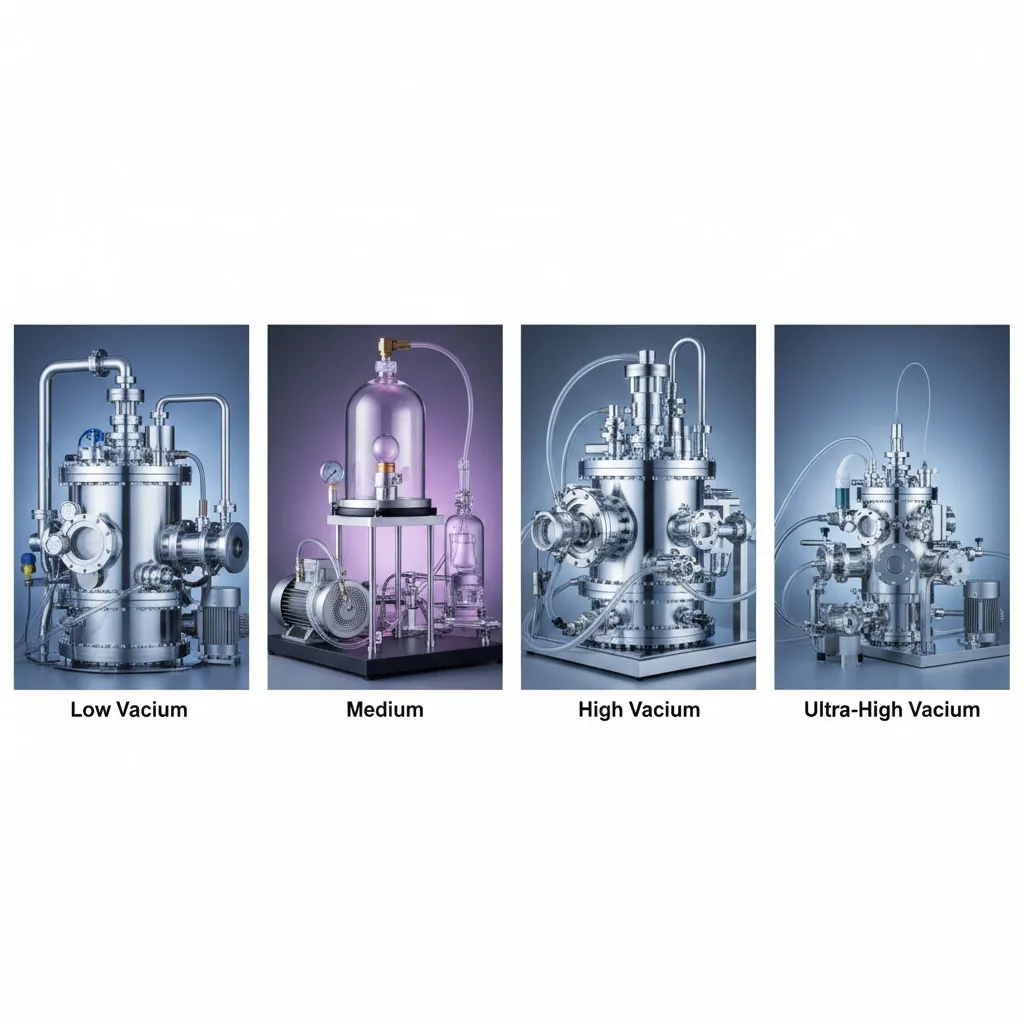
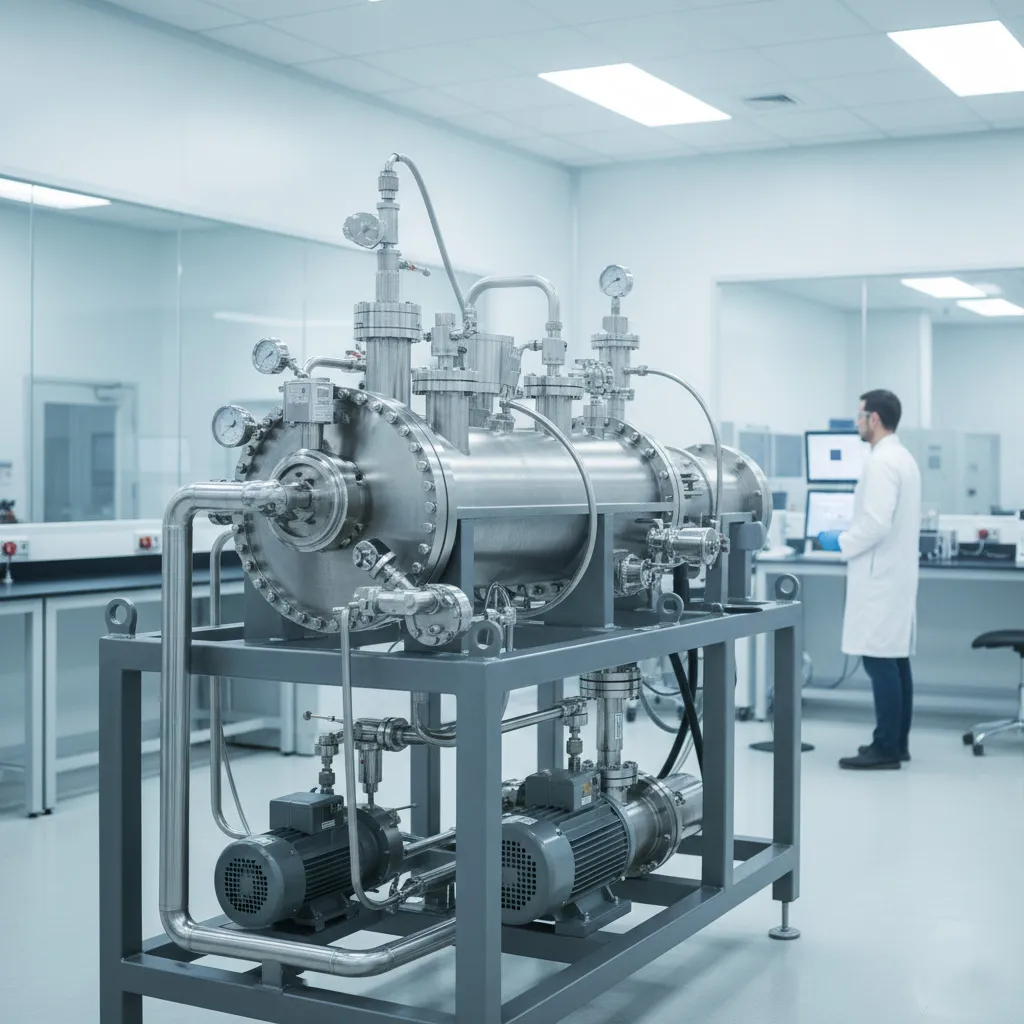
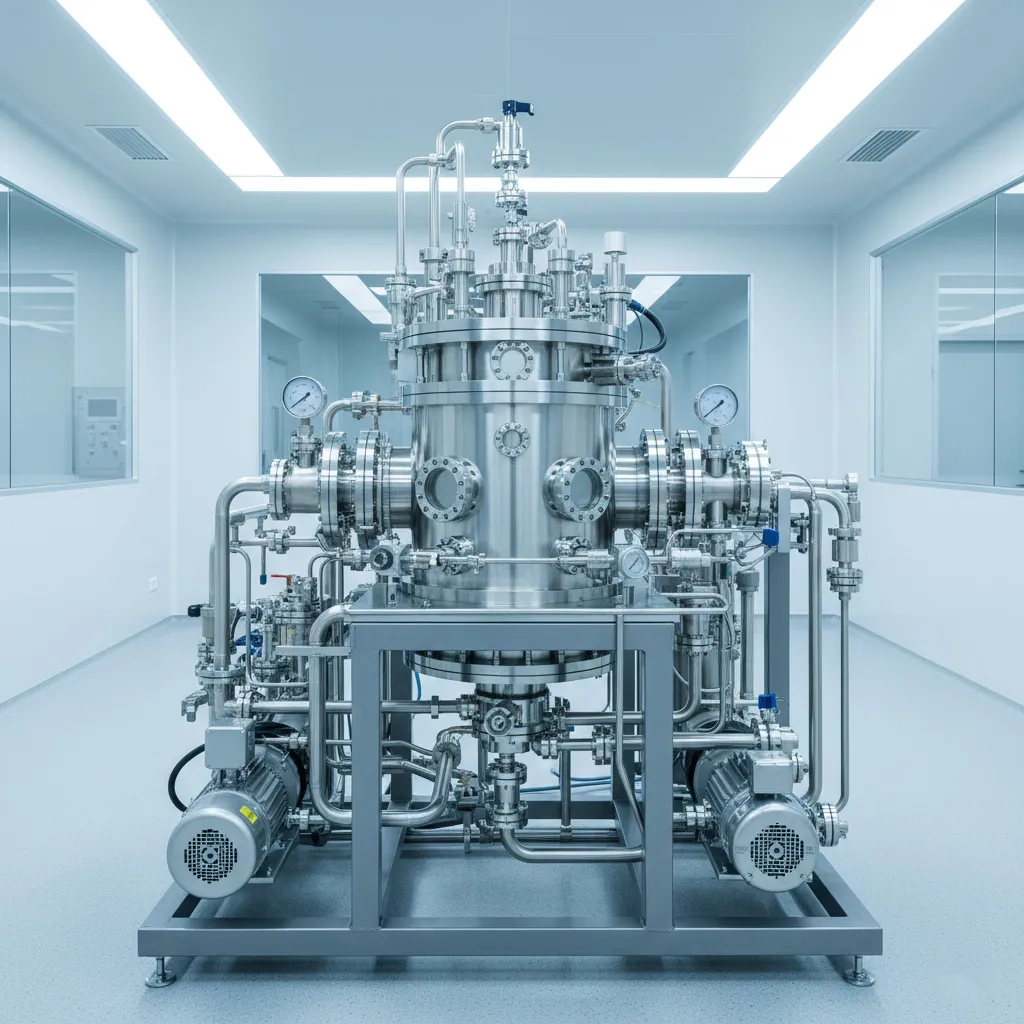
 Low Vacuum – The Starting Point
 Low Vacuum – The Starting Point
Typical Range: Atmospheric pressure down to ~1 mbar
Low vacuum is often the first step in most vacuum processes.
It is commonly used for:
Packaging and material handling
Rough evacuation of chambers
Pre-processing before higher vacuum stages
Low vacuum systems are robust, cost-effective, and forgiving. They are designed for reliability rather than extreme precision.
Medium Vacuum – Where Control Begins
 Medium Vacuum – Where Control Begins
Typical Range: ~1 mbar to 10⁻³ mbar
This is where vacuum starts influencing process quality.
Medium vacuum is used in:
Industrial drying
Furnaces and heat treatment
Degassing processes
Chemical and process industries
At this level, stability matters more than speed. Leaks, material compatibility, and pump selection begin to play a critical role.
High Vacuum – Precision Territory
 High Vacuum – Precision Territory
Typical Range: 10⁻³ mbar to 10⁻⁷ mbar
High vacuum environments dramatically reduce contamination and unwanted reactions.
They are essential for:
Thin-film coating (PVD / CVD)
Electronics and device manufacturing
Analytical and surface-sensitive processes
At high vacuum, system design becomes more refined. Even small issues — like improper seals or poor material choices — can affect performance.
Ultra-High Vacuum (UHV) – No Room for Error
 Ultra-High Vacuum (UHV) – No Room for Error
Typical Range: Below 10⁻⁷ mbar
Ultra-high vacuum is used only when absolutely necessary.
Typical applications include:
Semiconductor fabrication
Advanced research and surface science
Space simulation and testing
At UHV levels, everything matters:
Materials
Cleanliness
Outgassing
Assembly practices
UHV systems are engineered environments where microscopic details have macroscopic consequences.
This is a great primer on Vacuum Levels. I agree that the jump from Low Vacuum to Ultra-High Vacuum (UHV) can be confusing for beginners, but your explanation makes it simple. Looking forward to more posts on vacuum science!
Hi LabTech_Intro, thank you for the kind words! We’re glad you found the explanation helpful. Vacuum science can definitely get complex once you reach the UHV range, so we aim to make it as accessible as possible. Stay tuned—we have more technical guides and industry insights coming soon!
While the article focuses on the pressure levels, I’m curious about the human element in achieving UHV. We are setting up a new beamline and our team is debating footwear. Does Ultrahigh Vacuum Solution recommend specific cleanroom-certified ‘sneakers’ or overshoes to prevent hydrocarbon contamination from standard rubber soles? We want to ensure that our ‘comfort’ choices don’t lead to higher outgassing rates when we are opening the chamber for maintenance.
That’s a really good question Thomas and honestly something many teams only start thinking about after they run into contamination issues.
Footwear does matter in a UHV environment, but not because sneakers alone will ruin your vacuum. The bigger concern is what they bring into the space. Regular shoes can carry dust, tiny particles, and traces of hydrocarbons from rubber and adhesives. Once you open the chamber, all of that can find its way onto surfaces and eventually affect your vacuum quality.
In most labs, people do not switch to special “UHV sneakers.” Instead, the standard approach is to control contamination at the cleanroom level. The most common solution is using cleanroom shoe covers. These act as a barrier so whatever is on your regular footwear does not enter the controlled area. In more controlled setups, some teams keep dedicated cleanroom shoes that are only used inside the lab. In higher grade environments, full cleanroom boots are used along with proper suits.
What is important to keep in mind is that footwear is only one small part of the picture. The biggest contamination source is actually us. Skin, clothing, and even just being present near an open chamber introduce more hydrocarbons than shoes alone. Things like how long the chamber is open, how clean your tools are, and how many people are around will have a much bigger impact.
So if your team is trying to balance comfort and performance, you do not need to ban sneakers entirely. A practical approach is to allow comfortable footwear outside and make cleanroom shoe covers mandatory before entering the work area. Adding entry mats and keeping a controlled workflow during maintenance will go a long way.
In short, your comfort choices will not hurt your UHV performance as long as you have the right cleanroom practices in place.
This guide on UHV levels is very helpful. I’ve read that ‘dressing for the context’ is vital in a lab environment. Does the type of clothing our team wears under their cleanroom suits affect our ability to maintain 10^-8 mbar We’ve heard that certain synthetic materials can actually outgas through the suits and hinder our reach into Ultra-High Vacuum regimes.
You’ve touched on a very important ‘human’ element of vacuum science, Brandon! When we talk about Ultra-High Vacuum (UHV), we are fighting for every single molecule. To answer your question:Outgassing from Clothing: Yes, standard street clothes (especially those with heavy perfumes, fabric softeners, or high synthetic counts) release Volatile Organic Compounds (VOCs) that can bypass standard lab coats. Particle Shedding: Natural fibers like cotton shed thousands of microscopic particles per minute. In a ‘Rough Vacuum’ 10^-3 mbar, this might not be a dealbreaker, but in UHV, these particles act as tiny ‘gas sponges’ that trap moisture and slow down your pump-down time. The Fix: For UHV maintenance, we recommend ‘Full Gowning’ protocols—using non-shedding, ESD-safe coveralls, gloves, and hoods. This ensures that the only thing in your chamber is your experiment, not your team’s ‘daily fashion’!