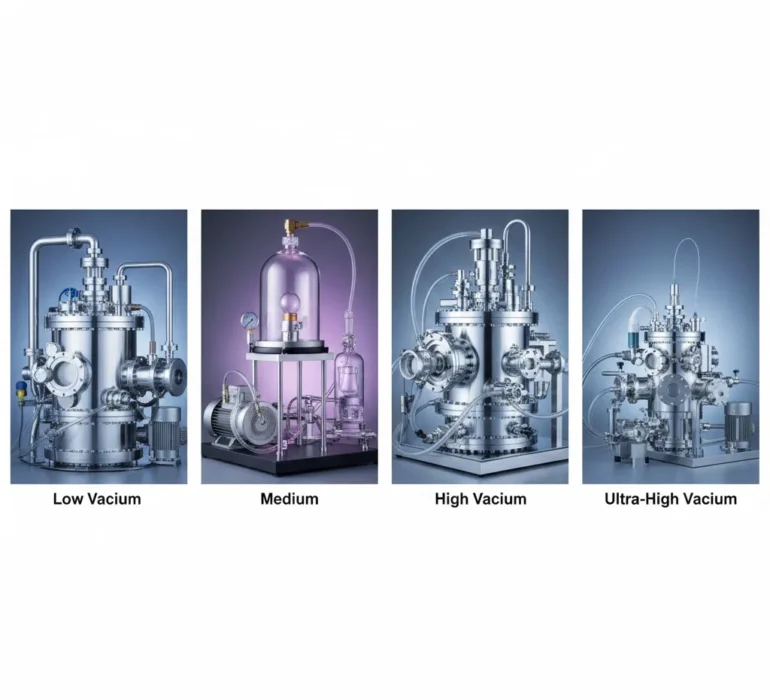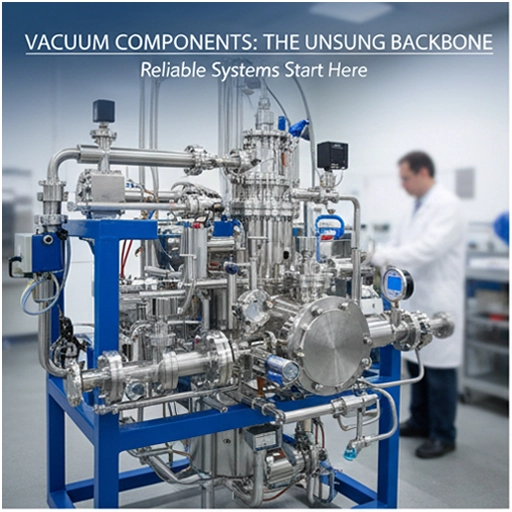
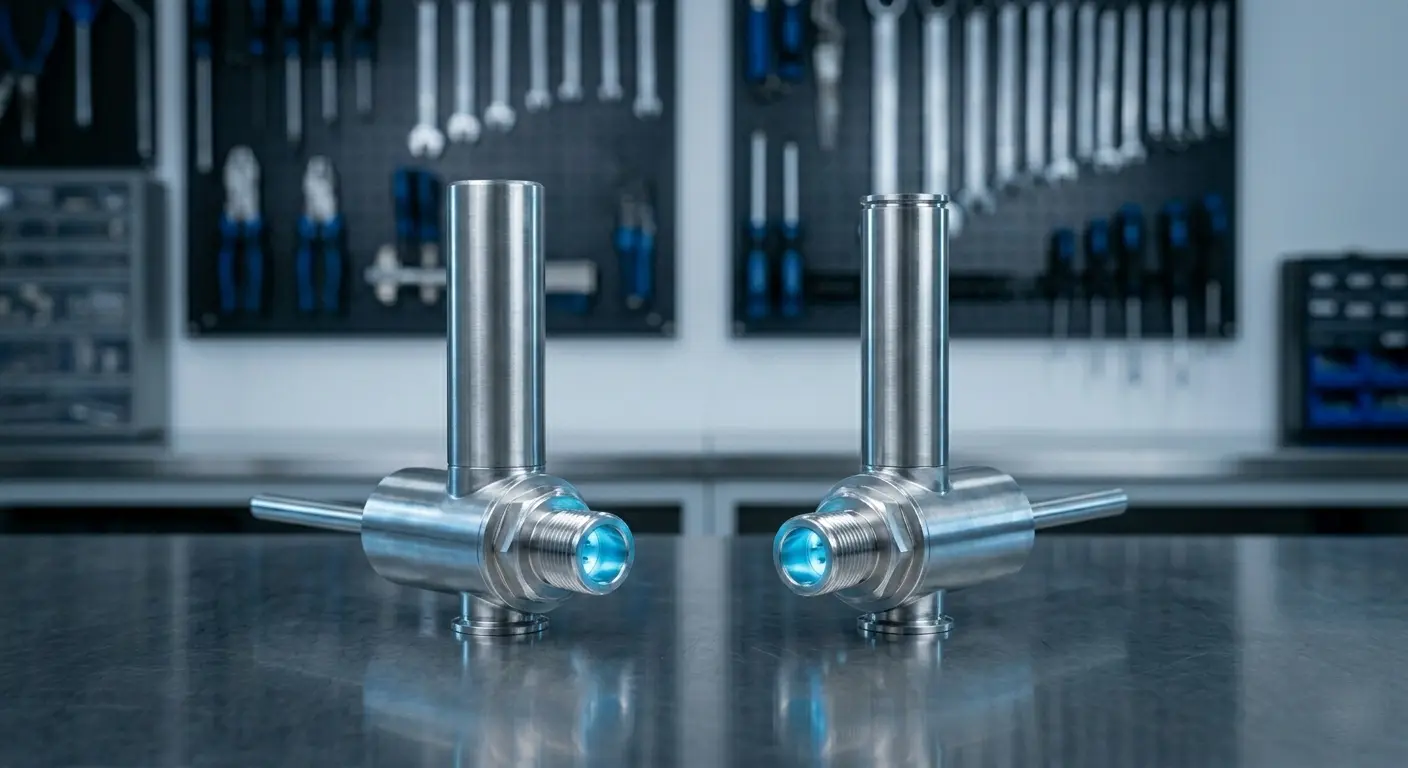
In the vacuum industry, we have a saying: “You can’t manage what you can’t measure.” But here’s the catch vacuum is a massive spectrum. Measuring the pressure on a factory floor compared to the “hard vacuum” of deep space is like trying to measure the distance to the moon with a school ruler. It just doesn’t work.
For engineers validating mission-critical components, the transition from “Earth atmosphere” to “Space simulation” requires a handoff between two very different technologies: the Pirani and the Penning.

The Thermal Workhorse: The Pirani Gauge
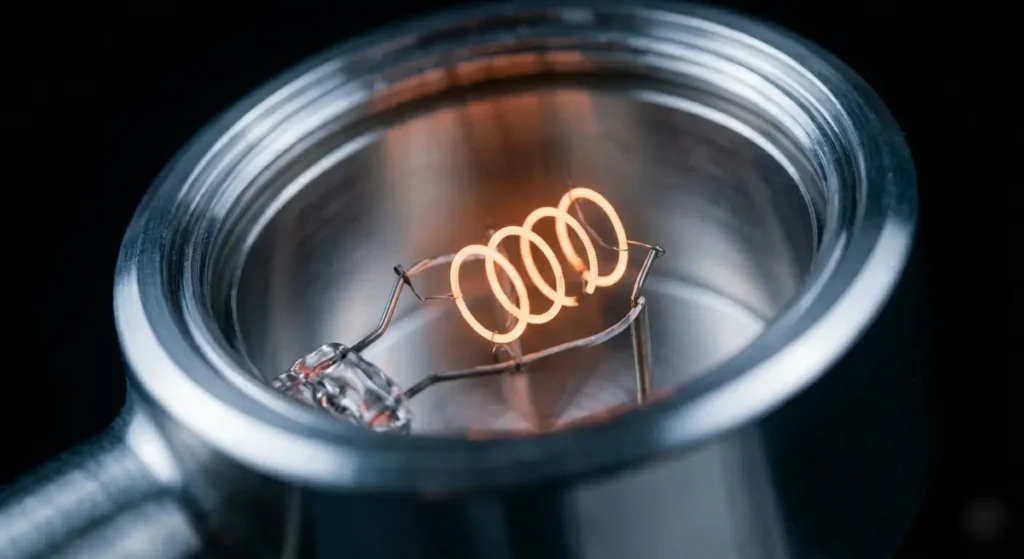
Think of the Pirani gauge as your “Ground Control.” It handles the heavy lifting from atmospheric pressure down to the roughing levels 10-3 mbar).
It works on a beautiful piece of physics: thermal conductivity. Inside the gauge, a heated filament loses heat to the gas molecules flying around it. As your pumps pull those molecules away, the filament stays hotter. The gauge measures that temperature change and tells you your pressure. Of course these gauges are gas dependent.
- Best for: Monitoring the initial pump-down, roughing lines and making sure your system is ready for the “big guns.”
The High-Vacuum Master: The Penning Gauge
Once you cross the 10-3 mbar threshold, there aren’t enough molecules left for a Pirani filament to “feel” them. This is where the Penning Gauge (the “Cold Cathode”) takes over.
The Penning doesn’t care about heat; it cares about electrons. It uses a high-voltage discharge and a powerful magnetic field to ionize the few remaining gas molecules. The resulting electrical current tells you exactly how deep into “space” your chamber has gone.
- Best for: Thermal Vacuum (TVAC) chambers, optical coating and high-altitude sensor validation and more.
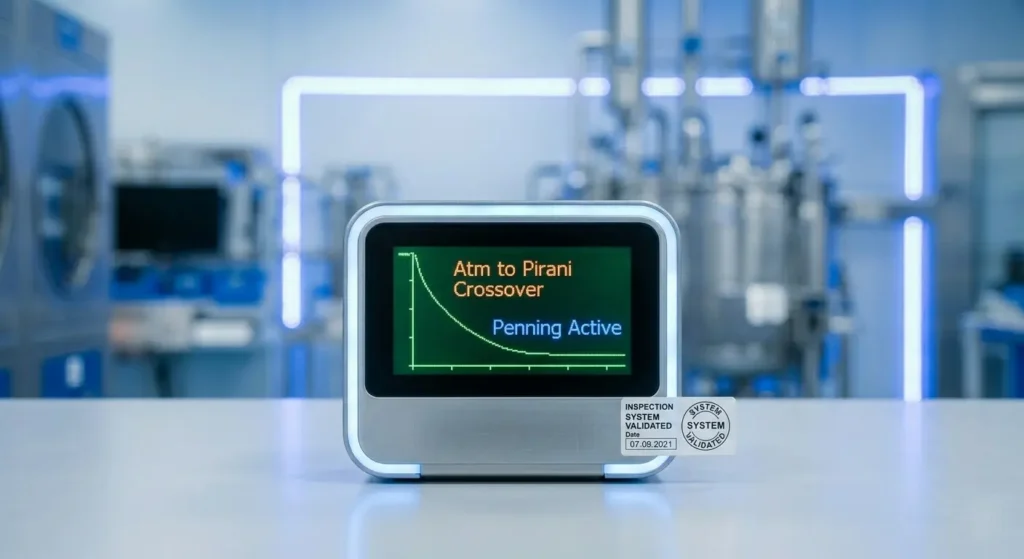
The Ultrahivac Strategy: The Seamless Crossover
In a high-stakes Aerospace test, you don’t have time to manually switch sensors. That’s why we advocate for a Multichannel Strategy. By integrating both sensors through a single controller, your system automatically hands over the “eyes” from Pirani to Penning. It’s seamless, it’s automated and it prevents the dreaded “sensor burnout.”