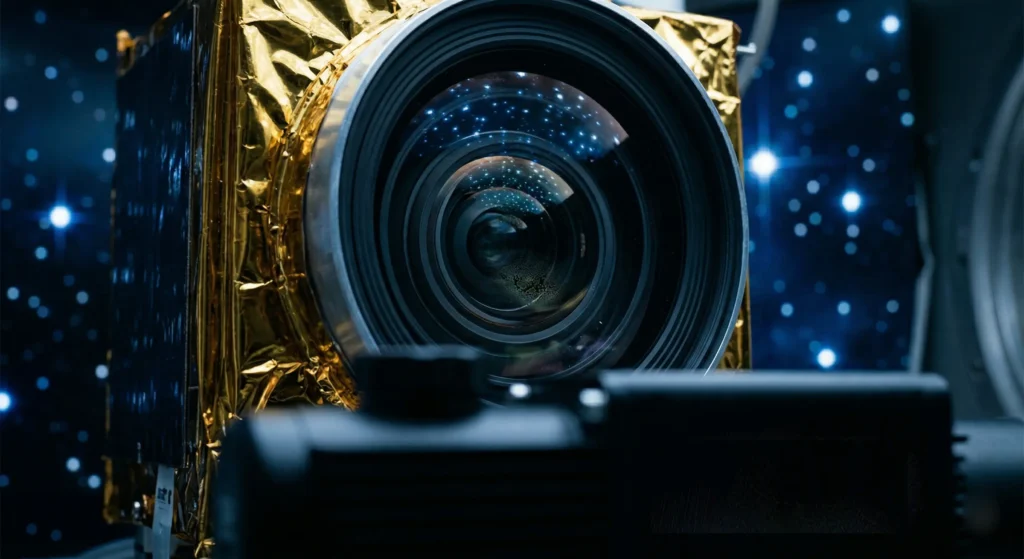
Ask any propulsion engineer or satellite systems manager what keeps them awake at night. It’s rarely the launch physics, it’s the decimals. It’s the microscopic contaminants that wait in the shadows of a vacuum chamber, ready to turn a billion-dollar mission into a failure.
When you are testing an infrared sensor destined for orbit or validating a telescope mirror that must peer across the galaxy, your testing chamber isn’t just a simulator it’s a sanctuary. The absolute last thing you need in that sanctuary is hydrocarbon backstreaming.
You’ve seen it: that faint, metallic “machinery smell” on a test floor? That’s not productivity. That is the smell of a potential liability. For anyone running a Thermal Vacuum (TVAC) cycle, that scent is a distress signal.
The “Zero Hydrocarbon” Requirement
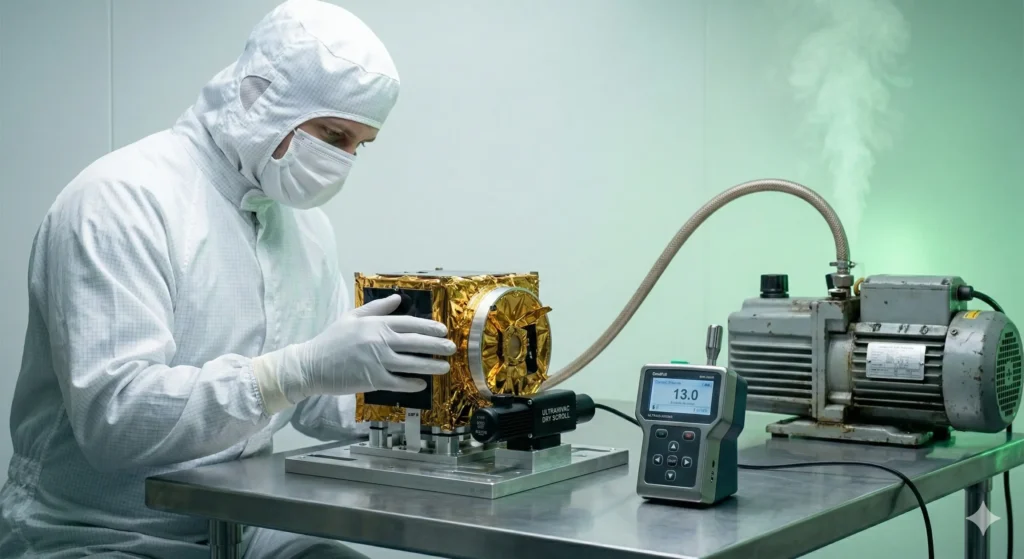
Legacy oil-sealed rotary vane pumps have been the dependable workhorses of industry for a century. They are robust. They are reliable. But they have a structural flaw. Under deep vacuum, microscopic oil vapors can migrate backward against the flow of gas. This is “outgassing.”
In a warehouse, who cares?
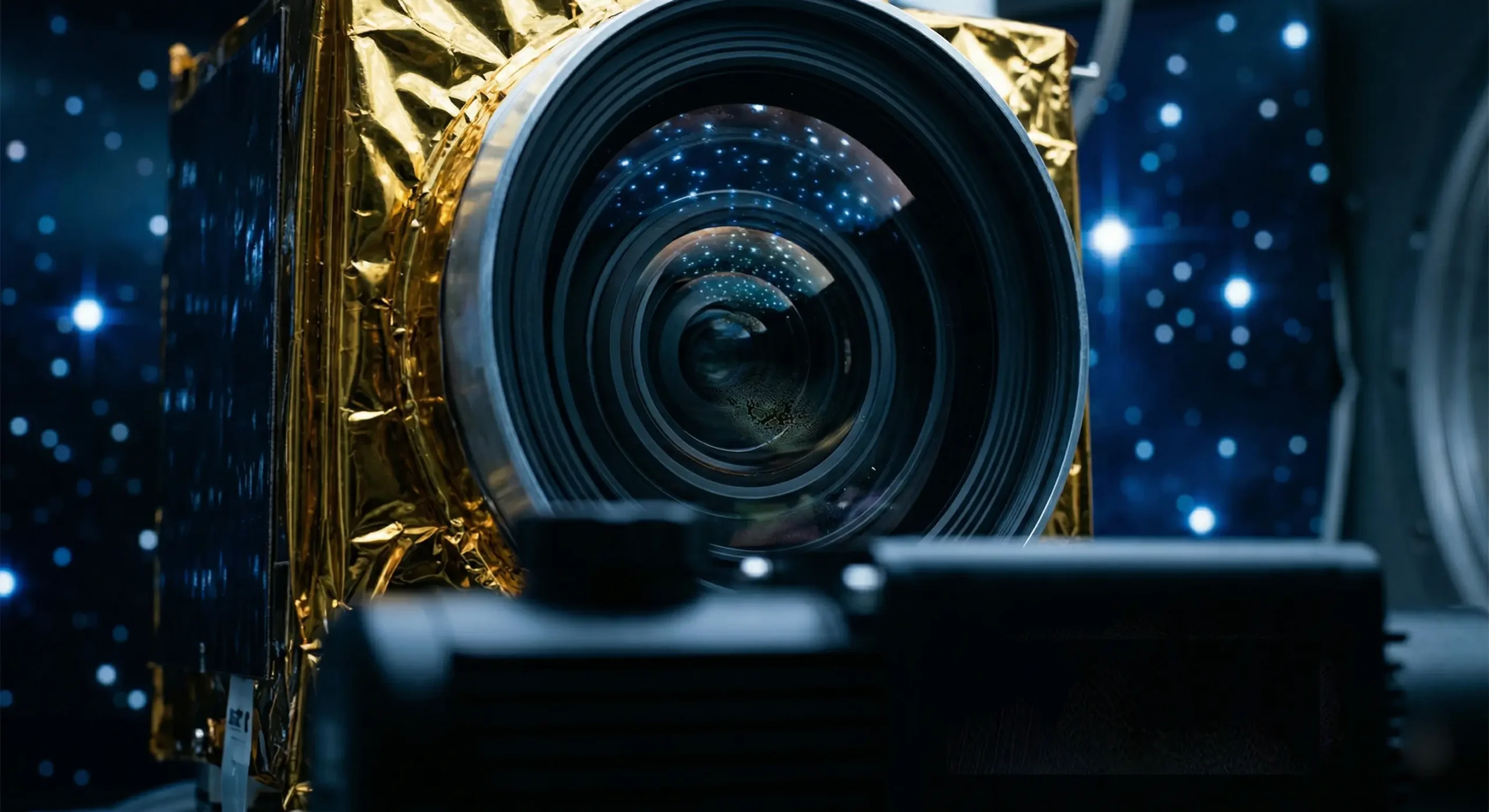
But inside a vacuum chamber, those vapors seek the coldest, most sensitive surface, the payload and stick to it. Suddenly, your expensive space camera has a “fogged lens.” Your multi-junction solar cell has a coated layer that drops its efficiency by 15%. Your infrared telescope has a “signature” that ruins its data. In this industry, that isn’t just a technical hiccup; it’s a mission failure and a congressional inquiry.
The Engineering Solution: Pure Physics, No Lubricant.
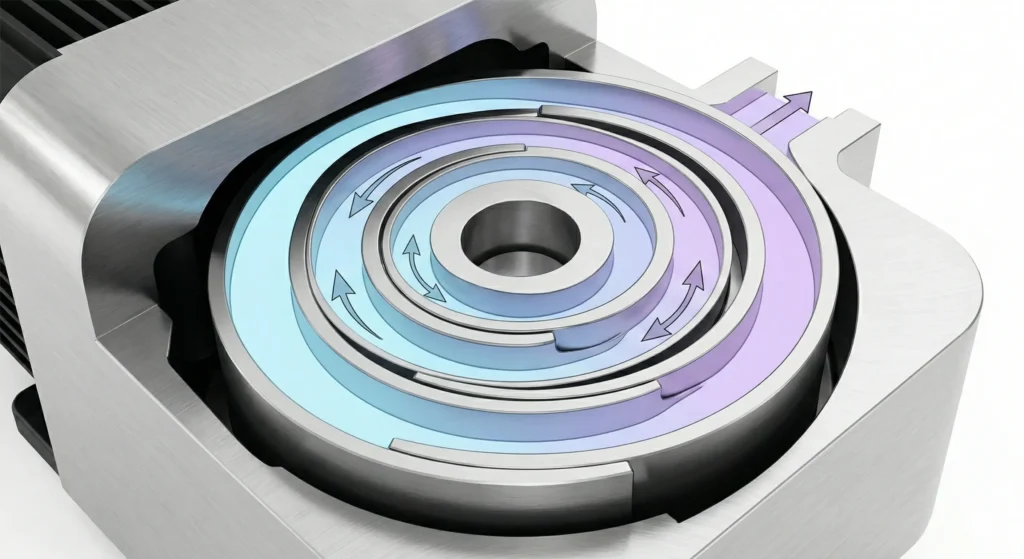
What makes a Dry Scroll Vacuum Pump (like the systems we engineer at Ultrahivac) the definitive choice for the Defense sector isn’t just the lack of oil; it’s the elegance of the movement.
Instead of pistons or vanes slathered in oil, these pumps use two interleaved spiral “scrolls.” One remains stationary while the other orbits it. This precise, continuous motion traps gas pockets at the edge of the spiral and migrates them toward the center for exhaust.
Because the tolerances are engineered to within microns, there is zero metal-to-metal contact. No contact means no need for oil. No oil means zero chance of hydrocarbon backstreaming. Your TVAC chamber stays a sanctuary.
Beyond Purity: The “Readiness” Wins
In the Aerospace & Defense industry, “operational readiness” is the ultimate metric. Making the switch to a dry vacuum solution (especially an Ultrahivac system) changes the day-to-day reality of your entire testing facility:
- Silence is a Feature: Traditional pumps chug, vibrate and yell. Ultrahivac Scroll pumps operate with a low, consistent hum. This isn’t just for comfort; it makes cleanrooms and sensitive optical tables significantly more bearable for the technicians working in them for 10+ hour shifts.
- The “Oil Change Ritual” is Dead: We have all been there—the hazardous waste disposal, the messy draining of hot oil, the smell. Dry pumps eliminate this entire maintenance silo. Your facility stays clean, and your AMC (Annual Maintenance Contract) costs plummet.
- Mission-Ready TVAC Cycles: A deep-space simulation cycle can last 14 days or longer. You need ultimate pressure (down to 10-2 mbar) that doesn’t drift. Dry scroll technology provides a flatter, more reliable pumping curve throughout the cycle, meaning your data stays clean.
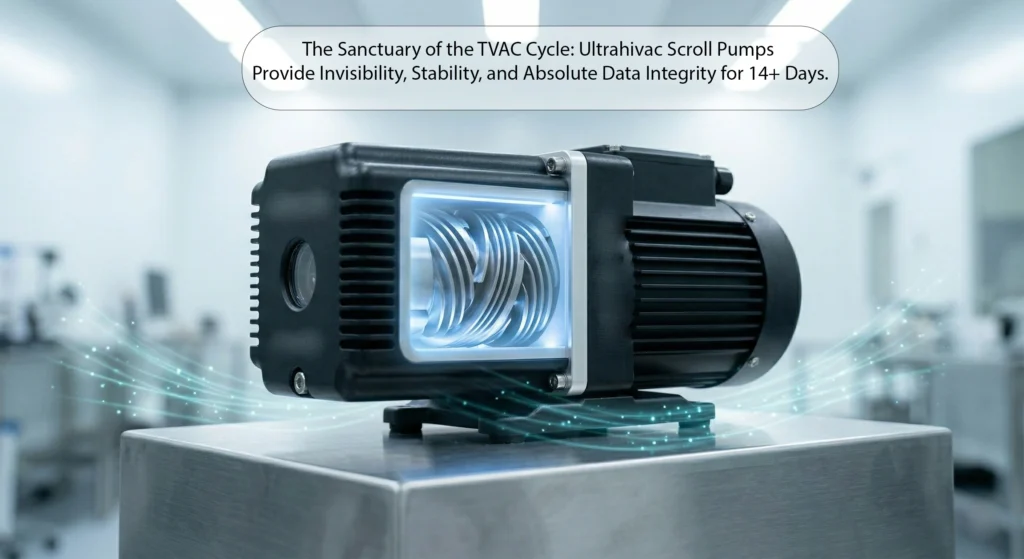
The Bottom Line
When you are responsible for validating a satellite that must survive the harsh vacuum of space, your equipment should be the absolute last thing on your mind. You need a vacuum environment that is invisible, steady and uncontaminated.
If you are still relying on legacy oil-sealed pumps for your Aerospace or Defense testing rigs, you are essentially gambling on your seals every single day. The cost of a “missed particle” is too high. It’s time to move toward a truly dry solution. Mission success starts with Ultrahivac.
[Explore Ultrahivac Dry Scroll Solutions for Aerospace & Defense]