
Why Vacuum Technology Is Everywhere (Even If You Don’t See It) ?
Most people never think about vacuum technology. There’s no reason to, until you realize that almost every advanced product around us depends on it.
From the smartphone in your hand to aircraft components, medical devices and research laboratories controlled vacuum environments quietly make modern industry possible.
At Ultrahivac, we work with teams who don’t just use vacuum systems they depend on them every day. This blog marks the beginning of our effort to explain vacuum technology in a way that is practical, clear, and grounded in real industrial experienc
So, What Exactly Is Vacuum Technology?
In simple terms, vacuum technology is about removing air and unwanted gases from a closed space to create a controlled environment.
But in industrial settings, it’s much more than that.
Vacuum allows engineers and scientists to:
Prevent contamination
Control reactions and processes
Achieve repeatable, reliable results
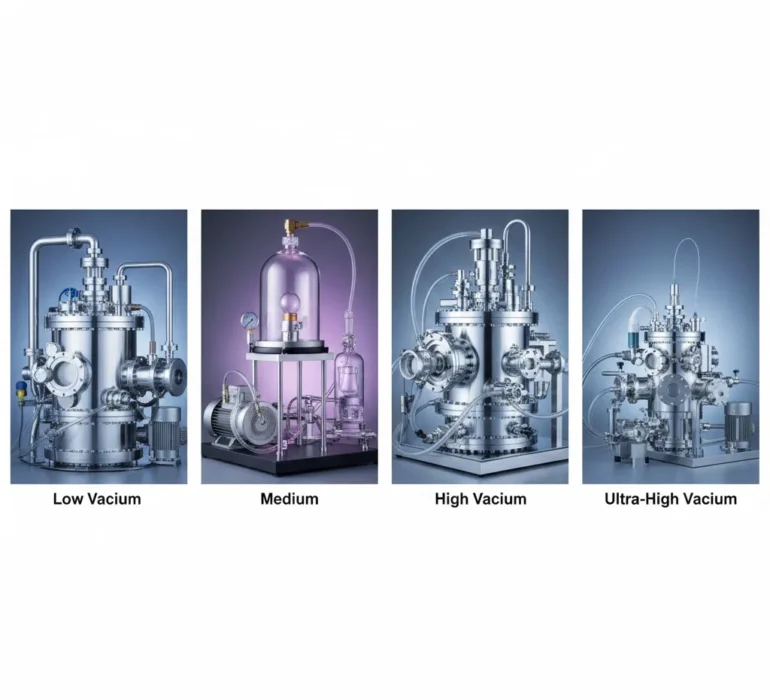
Different applications require different levels of vacuum:
Low vacuum for handling and packaging
Medium vacuum for industrial processing
High vacuum for electronics and coating
Ultra-high vacuum (UHV) for research, semiconductors and space simulation
Choosing the right level isn’t guesswork ,it’s a technical decision that directly affects outcomes.
How a Vacuum System Actually Works?
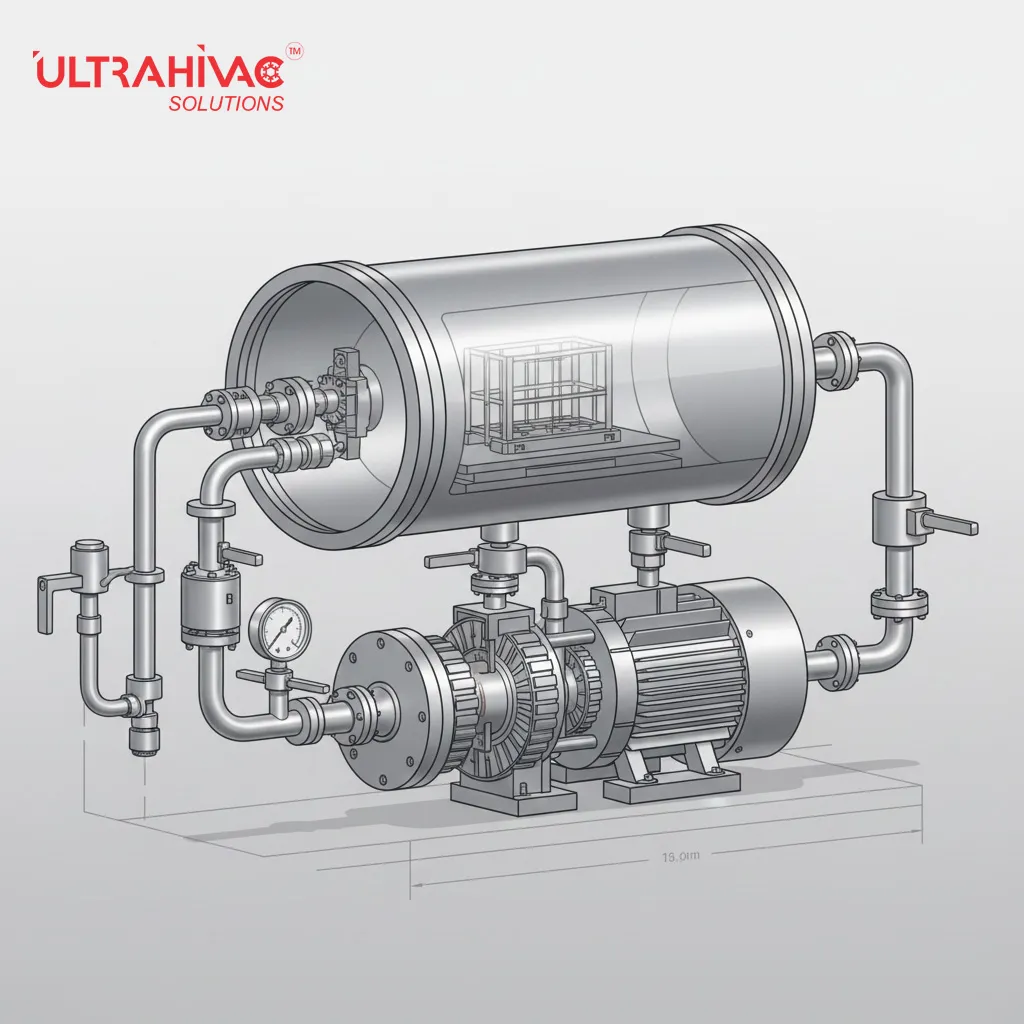
A vacuum system is not just a pump connected to a chamber.
It’s a combination of:
Pumps that remove gases
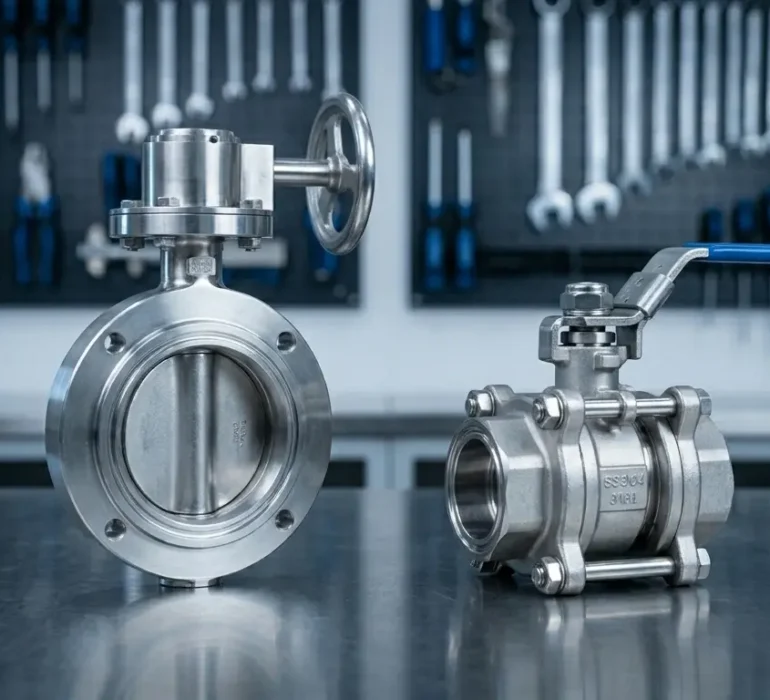
Valves that control flow
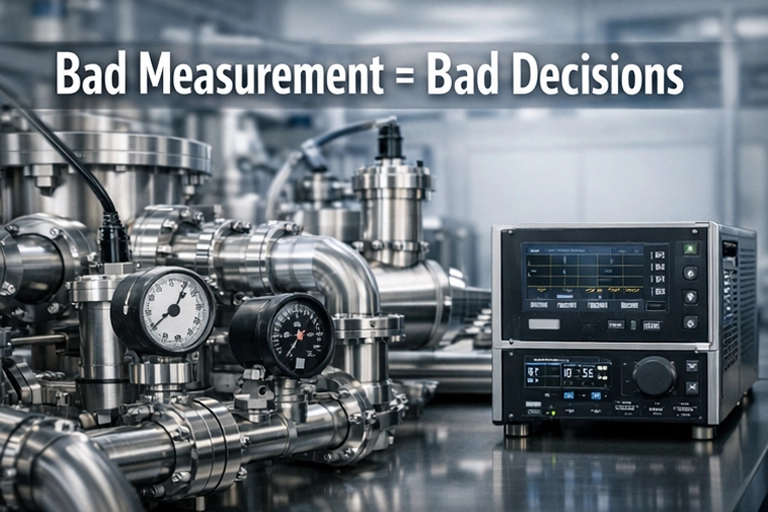
Gauges that measure pressure
Chambers and pipelines that hold the process
Leak detection systems that ensure stability
When everything works in harmony, the system runs quietly in the background.
When something is slightly off a seal, a fitting, a valve the entire process can suffer.
This is why system design and component compatibility matter as much as the pump itself.
Why Industries Rely So Heavily on Vacuum ?
Vacuum technology creates conditions that simply cannot exist at normal atmospheric pressure.
It enables:
Clean environments for sensitive materials
Accurate deposition and coating processes
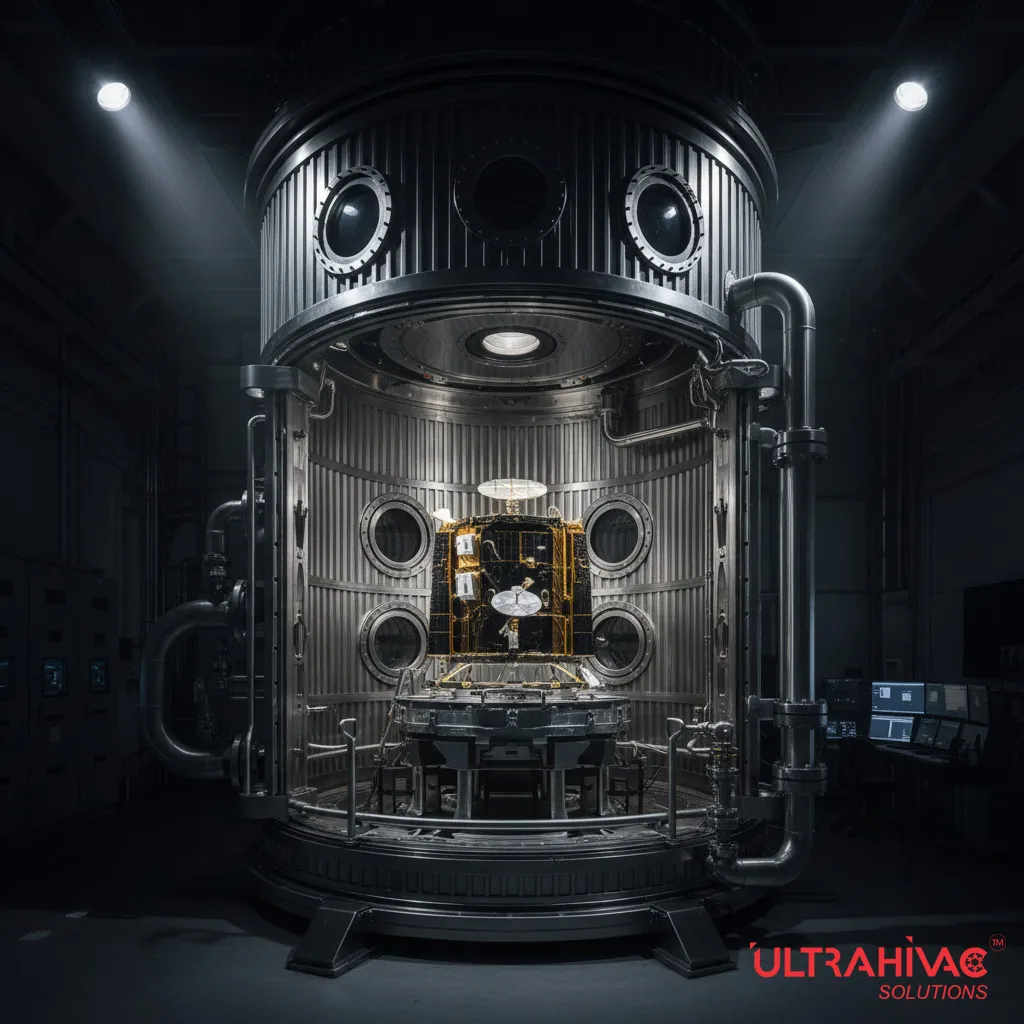
Simulation of extreme conditions
Consistent manufacturing at scale
Industries such as semiconductors, aerospace, pharmaceuticals and advanced manufacturing are built around these controlled environments. Without vacuum, many of their core processes wouldn’t be possible.
Where Vacuum Technology Is Used Every Day ?

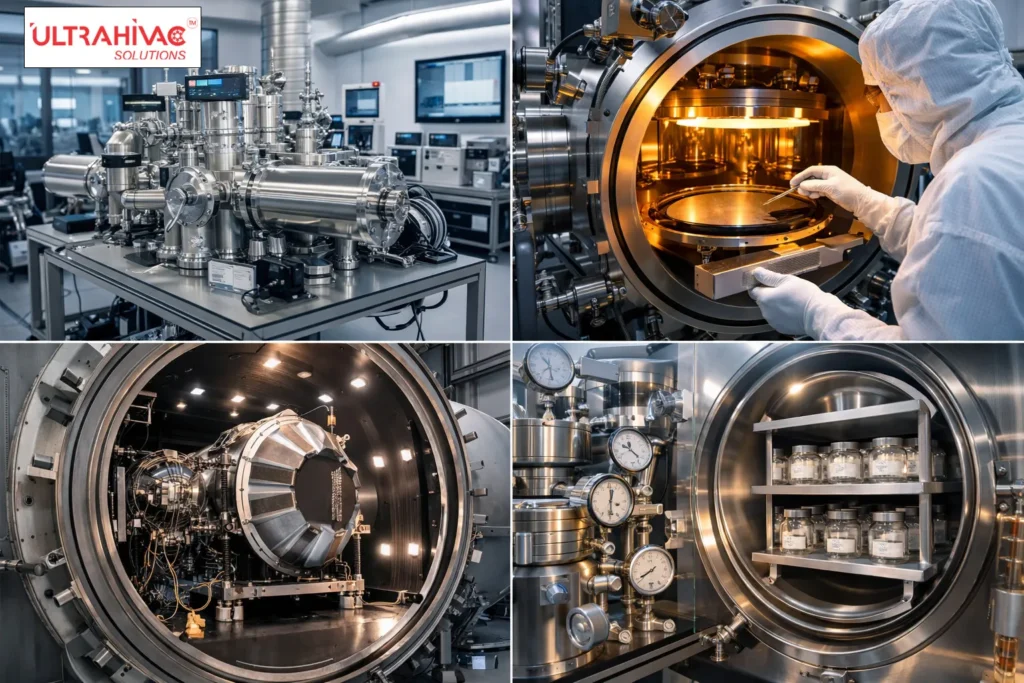
Vacuum systems are part of daily operations in:
Research and development laboratories
Semiconductor and electronics manufacturing
Aerospace component testing
Pharmaceutical drying and sterilization
Chemical and process industries
Coating, PVD, and CVD systems
Leak testing and quality assurance
Each use case has its own challenges and no two vacuum systems are truly identical.
Choosing the Right Vacuum Solution Is Not Just About Buying Equipment.
One of the most common mistakes we see is treating vacuum systems like standalone products.
In reality, selecting the right solution involves:
Understanding the process, not just the pressure
Matching materials to applications
Planning for maintenance and long-term reliability
The right system saves time, energy and cost. The wrong one creates downtime and frustration.
A Final Thought
Vacuum technology doesn’t demand attention but it deserves understanding.
This article is the first in a series where we’ll continue to break down vacuum concepts, applications, and real-world challenges in a way that engineers, operators, and decision-makers can relate to.
If vacuum plays a role in your process, this space is for you
This is a great introductory guide. I’m currently working with a small vacuum drying setup and I’m confused about one thing: My pump reaches the target ultimate pressure 10⁻² mbar) quickly when the chamber is empty, but as soon as we load the product, the pressure stalls much higher. Does this mean I need a pump with a deeper vacuum capability, or is my current pump simply lacking the pumping speed (CFM) to handle the outgassing?
Hi Arjun, that is a classic ‘System vs. Pump’ distinction!What you are experiencing is likely not a lack of Ultimate Pressure capability, but a mismatch in Pumping Speed relative to your Gas Load.Here is how to analyze it:Ultimate Pressure: This is the ‘floor’—the lowest the pump can go when there is zero gas to move. Your pump is clearly healthy since it hits 10⁻² mbar when empty.Gas Load (Outgassing): When you load your product, it releases water vapor or trapped air. This creates a ‘load.’ If the gas is being released faster than your pump’s pumping speed (m³/h or CFM) can remove it, the pressure will ‘stall’ at a higher level.The Solution: > You don’t necessarily need a ‘deeper’ vacuum pump; you likely need a pump with a higher displacement or a larger backing pump to keep up with the vapor release during the initial drying phase. Alternatively, check if your pumping lines are too narrow, as this ‘chokes’ the speed of the pump.At UltraHiVac, we often help clients size their pumps based on their specific product outgassing rates. If you can share the weight and material of your product, we can help you calculate the required CFM!